Dublin: Stories, Song and Sea Air on the River Liffey

Dublin reveals itself in layers. At first, you may notice the Georgian doors, the steady flow of the River Liffey and the musicians playing beneath the arches of the city centre. Stay a little longer and another Dublin emerges: a capital shaped by rebellion and literature, Viking settlement and maritime trade, old loyalties and constant reinvention.
A city best discovered at walking pace
Set on Ireland’s east coast, facing the Irish Sea, Dublin is both the country’s capital and its largest city. Yet it rarely feels overwhelming. Many of its essential sights lie within walking distance of one another, while compact neighbourhoods give the city a strong sense of intimacy.
The River Liffey divides Dublin into north and south, although locals may treat that distinction with more humour than seriousness. Elegant Georgian squares sit south of the river, while the north side offers grand civic buildings, historic thoroughfares and some of Dublin’s most vivid street life. Bridges stitch the two halves together, from the cast-iron Ha’penny Bridge to the modern Samuel Beckett Bridge farther east.
This is a city that rewards curiosity. Step away from the main routes and you may find a quiet churchyard, an independent bookshop, a traditional pub or a lane brightened by contemporary murals. Dublin’s famous sociability is real, but it is not confined to nightlife. It appears in café conversations, market stalls, theatre foyers and the easy exchange of directions with a stranger.
The city’s weather is famously changeable. A clear morning can become a silvery afternoon before sunlight returns in time to illuminate the brick façades. Bring a light waterproof layer, then continue exploring. Dublin is at its most atmospheric when the pavements shine after rain.
From Viking settlement to literary capital
Dublin’s origins stretch back more than a thousand years. Norse settlers established a significant base here in the ninth century, close to the place where the River Poddle met the Liffey. The city’s English name derives from the Irish Dubh Linn, meaning “black pool,” while the Irish name, Baile Átha Cliath, refers to the “town of the hurdled ford.”
Medieval Dublin grew around Dublin Castle and Christ Church Cathedral. Dublin Castle, built on the site of a Viking fortress, became the centre of English and later British administration in Ireland. Today its State Apartments, courtyards and gardens offer an accessible introduction to the city’s political history. Nearby, Christ Church Cathedral and St Patrick’s Cathedral recall Dublin’s medieval and ecclesiastical importance.
The eighteenth century transformed the city. Georgian Dublin expanded into graceful streets and garden squares, many of which remain defining features of the south side. Merrion Square, Fitzwilliam Square and St Stephen’s Green are framed by red-brick townhouses with fanlights and brightly painted doors. North of the river, Henrietta Street preserves another remarkable Georgian streetscape; 14 Henrietta Street traces the changing fortunes of one house, from aristocratic residence to crowded tenement.
Dublin also stands at the heart of Ireland’s struggle for independence. The General Post Office on O’Connell Street was a principal site of the 1916 Easter Rising. Kilmainham Gaol, where several leaders of the Rising were executed, tells a broader story of imprisonment, nationalism and social change. Both places help visitors understand how the modern Irish state emerged.
Then there are the writers. Dublin’s streets and citizens inspired James Joyce, whose novel Ulysses turns an ordinary day in 1904 into an epic journey through the city. Oscar Wilde grew up beside Merrion Square, Samuel Beckett studied at Trinity College, and W.B. Yeats helped shape Ireland’s cultural revival. Dublin was designated a UNESCO City of Literature in 2010, recognising a tradition that continues through its libraries, theatres, festivals and contemporary authors.
Day one: Georgian Dublin, Trinity College and the old city
Begin your first morning at Trinity College Dublin, founded in 1592 in the heart of the capital. Pass through its historic entrance into cobbled squares that feel removed from the surrounding traffic. The college’s best-known treasure is the Book of Kells, an illuminated manuscript created by early medieval monks. Its intricate pages are displayed as part of a visitor experience that also explores the manuscript’s artistry and preservation. Admission is timed, so booking ahead is sensible.
From Trinity, walk along Grafton Street, Dublin’s principal south-side shopping street. Buskers are part of its daily character, and the surrounding lanes contain cafés, restaurants and smaller shops. Pause at the bronze statue of Molly Malone before continuing to St Stephen’s Green. Once a private square, this landscaped park is now a public retreat of lawns, mature trees, flowerbeds and ponds.
Spend the late morning exploring Georgian Dublin. Walk around Merrion Square, where a colourful statue of Oscar Wilde reclines opposite the author’s childhood home. Close by, the National Gallery of Ireland holds Irish and European works and offers free access to its permanent collection. The National Museum of Ireland – Archaeology, on nearby Kildare Street, is another excellent choice, particularly for its prehistoric gold, Viking material and Iron Age objects.
After lunch, head toward Dublin Castle. Tour the State Apartments or simply explore the courtyards and Dubh Linn Garden behind the complex. Beside the castle, the Chester Beatty displays manuscripts, rare books and artworks from cultures across Asia, the Middle East, North Africa and Europe.
Continue into the medieval quarter to Christ Church Cathedral. Its crypt is one of the most memorable surviving spaces in the city. If time allows, walk on to St Patrick’s Cathedral, associated with Ireland’s patron saint and with Jonathan Swift, author of Gulliver’s Travels, who served as dean here.
For the evening, return toward the city centre for dinner. Temple Bar is lively and visually appealing, with cobbled streets and busy pubs, but it can also be crowded and expensive. Walk through it for the atmosphere, then consider continuing to South William Street, George’s Street or Camden Street, where Dubliners gather in restaurants, bars and music venues.
Day two: Revolution, whiskey and the Liberties
Dedicate your second day to Dublin’s political and industrial history. Begin at Kilmainham Gaol, west of the centre. Opened in 1796, the prison held figures from several Irish rebellions as well as many ordinary citizens affected by poverty and hardship. Its guided tour is powerful and historically detailed, taking visitors through stark corridors, cells and the celebrated Victorian East Wing. Tickets often sell out, so advance booking is strongly recommended.
A short walk away, the Irish Museum of Modern Art occupies the Royal Hospital Kilmainham, a seventeenth-century building set within formal grounds. Even if you do not visit every gallery, the architecture, courtyard and gardens make this a worthwhile stop.
Next, make your way into the Liberties, one of Dublin’s oldest neighbourhoods. Long associated with markets, crafts, brewing and distilling, it retains a distinct local character. The Guinness Storehouse is its most famous attraction. Housed in a former fermentation plant at St James’s Gate, the exhibition explains the ingredients, advertising and global story of Guinness. The visit concludes high above the city, where the Gravity Bar offers wide views across Dublin’s rooftops toward the mountains and bay.
Whiskey enthusiasts can also tour one of the area’s working distilleries. Options include the Teeling Whiskey Distillery in Newmarket and Pearse Lyons Distillery, located in a restored church on James’s Street. Tours generally explore production methods and conclude with a tasting; non-alcoholic alternatives may be available.
For lunch or an afternoon snack, look around Meath Street, Thomas Street or The Liberties’ newer café and restaurant spaces. This part of Dublin is not an open-air museum: it remains a lived-in district where traditional shops stand beside creative studios and contemporary businesses.
In the late afternoon, walk back toward the river. Cross by the Ha’penny Bridge, named for the former toll once charged to pedestrians, and explore the north side. O’Connell Street is dominated by the Spire of Dublin and the General Post Office. The GPO remains a working post office as well as a landmark closely connected to the Easter Rising.
Spend the evening in a traditional pub. Live music sessions vary by venue and night, so check current schedules and remember that the best sessions are performances rather than background entertainment. Listen closely, allow musicians space and enjoy the informal rhythm of the room.
Day three: The north side, Docklands and Dublin Bay
Start your final day on O’Connell Street before walking east to EPIC The Irish Emigration Museum in the restored vaults of the CHQ building. Its interactive galleries examine why people left Ireland and how Irish emigrants influenced politics, culture, science, sport and business around the world.
Continue through the Docklands, an area transformed from working port infrastructure into a district of offices, apartments, cultural venues and riverside walks. The harp-shaped Samuel Beckett Bridge is one of modern Dublin’s defining structures. Nearby, the Jeanie Johnston is a replica nineteenth-century emigrant ship that interprets the experience of Atlantic crossings during the Great Famine era.
For a deeper encounter with the city’s social history, travel to 14 Henrietta Street. This museum follows the life of a Georgian townhouse that later became a tenement occupied by numerous families. Guided visits connect architecture with personal stories and show how dramatically central Dublin changed over two centuries.
After lunch, give the afternoon to Dublin’s coastal side. Take the DART suburban train north to Howth, a fishing village within the wider city and county. Walk along the harbour, look for seabirds and enjoy views toward Ireland’s Eye. The cliff paths are scenic, but conditions can be slippery or windy; choose a route suited to the weather and your ability.
Alternatively, take the DART south to Sandycove and Dún Laoghaire. At Sandycove, the James Joyce Tower recalls the opening of Ulysses, while Dún Laoghaire’s long piers provide an easy sea-air walk. Both options reveal an essential truth about Dublin: this is not only a river city but also a coastal capital.
Return to the centre for a final dinner, followed by a theatre performance, a quiet drink or an evening walk beside the Liffey. The Abbey Theatre is Ireland’s national theatre, while the Gate Theatre, Project Arts Centre, Bord Gáis Energy Theatre and smaller venues present varied programmes throughout the year.
What to eat and drink
Dublin’s food scene ranges from historic dining rooms to casual counters, bakeries and ambitious modern restaurants. Irish cooking has become increasingly confident in highlighting local seafood, farmhouse cheese, seasonal vegetables and high-quality meat.
For breakfast, try porridge, soda bread or a full Irish breakfast of eggs, sausages, bacon, black and white pudding, tomato and toast. Portions are often generous, making it a practical start before a long day of walking.
At lunch, look for seafood chowder served with brown bread, open sandwiches, soup or fish and chips. Dublin Bay prawns, also known as langoustines, may appear on seasonal menus, though availability and price vary. Traditional dishes such as Irish stew, coddle and bacon with cabbage are offered in selected pubs and restaurants. Coddle, closely associated with Dublin, is a comforting dish usually made with sausages, bacon, potatoes and onions.
Contemporary Dublin is also notably international. The city’s neighbourhoods offer excellent Italian, Middle Eastern, East Asian, African and Eastern European food, alongside vegetarian and vegan cooking. George’s Street Arcade and food markets can be useful for informal meals, while Capel Street and the streets around Camden Street offer particularly broad choices.
Guinness remains Dublin’s emblematic drink, but it is not the only option. Irish whiskey, locally produced gin, craft beer and alcohol-free drinks are widely available. In pubs, ordering at the bar is common, although table service is standard in many food-led venues. Tipping is appreciated for good service but is generally more restrained than in North America.
Where to stay, from budget beds to landmark hotels
Dublin accommodation can be expensive, particularly during summer weekends, major concerts and events around St Patrick’s Day. Booking early usually provides the widest choice.
Budget travellers can find hostel dormitories from roughly €30–€70 per person, with private hostel rooms and simple guesthouses often around €90–€160 per night. Prices rise sharply at busy times. Areas near Smithfield, the north city centre and the Liberties can offer convenient alternatives to the streets around Grafton Street.
Mid-range hotels generally cost about €150–€300 per night, depending on season and location. St Stephen’s Green and the Georgian quarter are central and attractive, while Smithfield offers access to the Luas tram. The Docklands suits visitors who prefer modern hotels and riverside surroundings, although some streets are quieter at weekends.
Luxury rooms commonly begin around €300 and can exceed €600 per night. Dublin’s best-known high-end properties include The Shelbourne beside St Stephen’s Green, The Merrion among restored Georgian townhouses and The Westbury near Grafton Street. For atmosphere and convenience, choose a central location; for calmer evenings, consider Ballsbridge, Ranelagh or coastal districts connected by DART.
Practical information for planning your visit
Dublin Airport is the city’s international gateway, located about 10 kilometres north of the centre. It has extensive connections across Europe and direct flights to a number of North American and Middle Eastern destinations. Buses and coaches link the terminals with the city centre, while taxis are available outside arrivals. Journey times depend heavily on traffic.
Visitors arriving from elsewhere in Ireland can use intercity trains to Heuston or Connolly stations. Bus services connect Dublin with towns and cities across the island, while ferries from Britain and continental Europe serve Dublin Port. Ferry passengers should check onward transport arrangements, as the port is spread across a large area.
Central Dublin is highly walkable. Dublin Bus operates an extensive network, the Luas tram has two main lines, and the DART railway follows the coast. Contactless bank-card payment has expanded across public transport, but arrangements can differ by operator; a Leap Card remains useful for repeated journeys. Taxis are plentiful, and licensed cabs display roof signs and use meters.
Spring and early autumn offer a good balance of daylight, manageable crowds and mild weather. Summer brings long evenings and a busy festival atmosphere, while winter is quieter, with short days and festive lights. St Patrick’s Festival in March is vibrant but exceptionally popular, so accommodation should be reserved well ahead.
Rain is possible in every season. Pack layers, comfortable walking shoes and a compact waterproof jacket rather than relying on a heavy umbrella in coastal winds.
Leave with a story of your own
Dublin’s great landmarks deserve their reputation, but the city’s lasting appeal often lies between them: a conversation at a pub counter, gulls circling above the Liffey, a line of poetry remembered in Merrion Square or the first glimpse of the sea from a DART window.
Come for the manuscripts, music and history, but leave room for the unplanned. Dublin has spent centuries turning everyday life into stories, and it is always ready to offer visitors a place within the next one.
Photo gallery
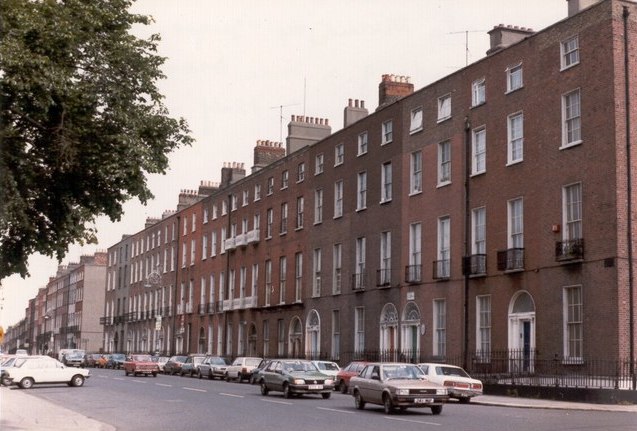
The town centre and its everyday atmosphere in Dublin, Ireland.
Merrion Square, Dublin. The square was laid out between 1762-64. On three sides it has some of the finest examples of Georgian architecture in Dublin. Until fif
Foto: D Gore · CC BY-SA 2.0 · Wikimedia Commons

The town centre and its everyday atmosphere in Dublin, Ireland.
Dublin - Merrion Square - Georgian Terraced Houses These 4-story terraced houses included a kitchen in the basement, a dining room on the ground floor, a drawin
Foto: Joseph Mischyshyn · CC BY-SA 2.0 · Wikimedia Commons

One of the historic landmarks you can visit here in Dublin, Ireland.
The interior of John's Lane Church in Dublin, Ireland.
Foto: Diliff · CC BY-SA 3.0 · Wikimedia Commons

One of the historic landmarks you can visit here in Dublin, Ireland.
The interior of St Mary's Pro-Cathedral in Dublin, Ireland.
Foto: Diliff · CC BY-SA 3.0 · Wikimedia Commons

Nature and day-trip options in the area in Dublin, Ireland.
Entrance to Irishtown Nature Park, Irishtown, Dublin 4
Foto: Gallags6 · CC BY-SA 4.0 · Wikimedia Commons

Nature and day-trip options in the area in Dublin, Ireland.
Abutilon pitcairnense, from Pitcairn Island, cultivated in a glasshouse of The Irish National Botanic Gardens, Glasnevin, Dublin, Ireland.
Foto: Salix · CC BY-SA 4.0 · Wikimedia Commons

The regional food you can taste here in Dublin, Ireland.
Modern Irish Food in Ireland uses many traditional ingredients cooked and presented in a way that reflects the international influences acquired by Irish Chefs
Foto: Zackgallagher · CC BY-SA 4.0 · Wikimedia Commons

The regional food you can taste here in Dublin, Ireland.
Preedee Thai Cuisine, Camden Rd
Foto: N Chadwick · CC BY-SA 2.0 · Wikimedia Commons
Photographs come from Wikimedia Commons and are used under the licences shown, with attribution.